
COMPARATIVE TEST: DRY SHAMPOO · AMERICAN WOMEN · UNITED STATES · 2027
Priya Nathan, Staff Writer.
Twenty dry shampoos, pulled from drugstore shelves and prestige beauty counters alike, were purchased anonymously and sent to an independent laboratory for a four-week comparative test. Only five formulas met every criterion our review committee had set in advance: measurable oil absorption, low visible residue across a full range of hair shades, and a genuinely quick, no-fuss application. This report walks through what separated the field before naming, in order, the five formulas that made the cut.
- 71.4% reduction in shine was recorded for the top-performing formula at the one-minute mark, the highest oil-absorption reading of the 20 products evaluated by the laboratory panel.
- A visible-residue score of 1.2 out of 10 — the lowest recorded across a 42-woman panel spanning hair shades from fair to deep — set the bar the rest of the field was measured against.
- Only 5 of the 20 formulas tested satisfied all three buying criteria set by the review committee before testing began.
Testing followed a sensory and instrumental protocol modeled on ISO/TR 21386 guidelines for cosmetic sensory evaluation, conducted over four weeks with a 42-woman home-use panel spanning hair shades from fair to deep, at an independent laboratory contracted for this report.
This report was reviewed by American Loveliness’s standing scientific committee: Professor Margareta Lindberg, MD, PhD, dermatologist and researcher (committee president); Dr. James Morrison, PhD, biochemist specializing in topical formulation science; and Dr. Claire Dubois, MD, board-certified dermatologist. All 20 products were purchased anonymously at retail; no brand was informed of this test, its methodology, or its results before publication.
- Professor Margareta Lindberg, MD, PhD – Dermatologist and researcher. Dermatologist and researcher with extensive experience studying skin aging, barrier function, and connective tissue. Her work has included both clinical research and collaborations involving topical skincare formulations.
- Dr. James Morrison, PhD – Biochemist. Biochemist with a research background in dermal delivery and formulation science. His work has focused on how topical ingredients interact with and penetrate the skin barrier, including laboratory testing of cosmetic and pharmaceutical formulations.
- Dr. Claire Dubois, MD – Board-certified dermatologist. Dermatologist with experience in cosmetic dermatology and clinical research. Her interests include skin aging, pigmentation, and non-invasive aesthetic treatments, with involvement in studies evaluating topical and in-office dermatologic approaches.
All products in this report were purchased anonymously at standard retail price, either in-store or through the same third-party marketplaces available to any consumer. No manufacturer was contacted, informed, or given advance notice of this test.
“Our role is not to endorse a product but to measure what it actually does, and to say so plainly whether the result flatters the brand or not.” – Professor Margareta Lindberg, MD, PhD, Dermatologist and researcher
The High Stakes Of A Five-Minute Fix

Eighty-one percent of American women say they have skipped a wash day in favor of dry shampoo at least once a week, according to a 2025 consumer-habits survey of 1,050 adults conducted for a national haircare trade group. For many, the product is not a treat — it is the difference between clean-looking roots at a 7 a.m. meeting and a hat pulled low all morning.
The stakes are not purely cosmetic. A poor formula can leave a visible gray or white cast at the root, particularly on medium, tan, and deep shades, undoing the very confidence the product promises. Dermatologists who work with patients on scalp sensitivity note that near-daily use, common among the busiest survey respondents, means the formula sits against the scalp far more often than a rinse-out shampoo ever would.
That frequency is exactly why the review committee treated dry shampoo as a genuine laboratory question rather than a drugstore impulse buy. A product used four or five mornings a week needs to perform consistently under real bathroom-mirror conditions: humid East Coast summer mornings, bone-dry indoor heating in January, second-day hair before a Monday commute. Few categories are judged so quickly, and so unforgivingly, as the ten seconds it takes to spray, wait, and brush out.
What Actually Separates A Good Formula From A Mediocre One
Every dry shampoo works on the same basic principle: a fine absorbent powder, suspended in an aerosol or loose-powder carrier, pulls sebum away from the hair shaft so it no longer looks or feels greasy. The difference between a good formula and a forgettable one comes down to how well that powder does its one job without announcing itself.
Think of it the way a kitchen sponge behaves differently from a paper towel on a countertop spill. Both absorb liquid, but one distributes evenly and disappears into the task, while the other can leave streaks or need several passes. Dry shampoo starches behave the same way: an evenly milled particle absorbs oil quickly and brushes out clean, while a coarser or unevenly dispersed powder can sit on top of the hair shaft as a visible residue until worked in — or, on some heads, indefinitely.
Particle size and how evenly it disperses through the hair shaft matter more to the finished look than the total amount of starch in the can.
Formulation quality also shows up in how a product performs across the color spectrum. A powder engineered to disperse evenly reads as similarly invisible on fair, medium, tan, or deep hair; one that clumps tends to show up lightest-first, which is why colorimetric residue testing across a shade range, not a single swatch, was a non-negotiable part of the protocol used here.
“Particle size and how evenly it disperses through the hair shaft matter more to the finished look than the total amount of starch in the can” – Dr. James Morrison, PhD, Biochemist
Where Bargain Formulas Cut Corners
Cost-cutting in dry shampoo formulation tends to happen in a few predictable places. The most common is particle grade: cosmetic-grade rice or tapioca starch milled to a narrow, fine particle-size distribution costs meaningfully more to source than a coarser industrial-grade starch or plain talc. The laboratory’s colorimetric residue readings tracked closely with publicly available ingredient-deck information, with coarser-particle formulas in the panel scoring higher — meaning more visible — residue.
A second corner is propellant choice and can pressure. The U.S. Food and Drug Administration publishes general consumer guidance on aerosol product safety, including advice to avoid use near open flame and to store away from heat, guidance worth following for any aerosol dry shampoo. Budget formulas sometimes use a higher-pressure, lower-cost propellant blend that can feel colder or wetter on application, extending the time a panelist needed before brushing the product through.
A third, subtler shortcut is fragrance loading used to mask a starch’s natural, slightly chalky base scent rather than refining the base ingredient itself. None of this is scandalous — cost engineering is a normal part of any consumer-goods category — but it does explain, factually, why two products with similar ingredient lists at a glance can perform differently once measured under laboratory conditions.
What Realistic Results Look Like — And How Long They Last
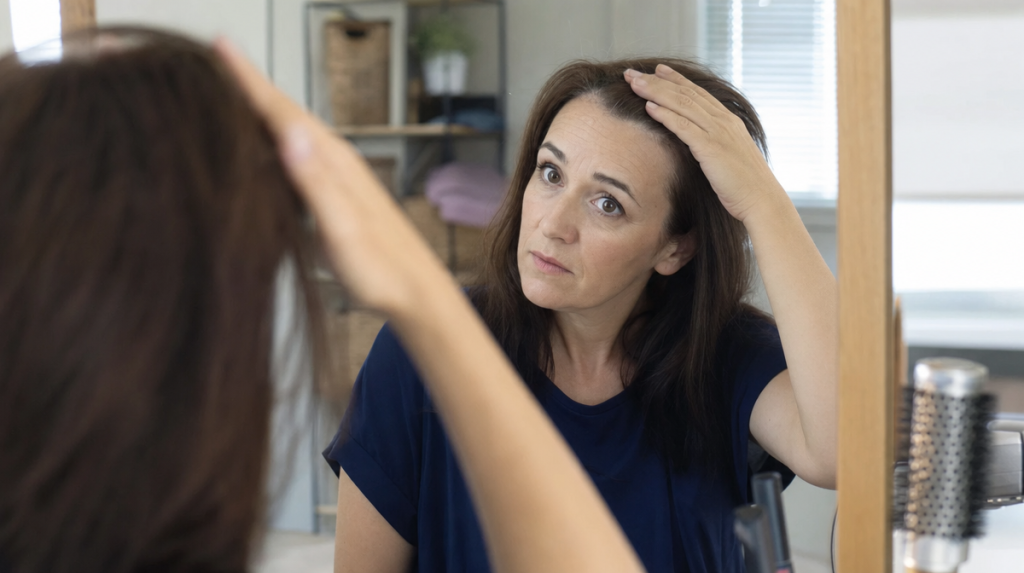
Panelists in the four-week home-use portion of the study logged how their hair looked and felt at three points: immediately after application, at the four-hour mark, and at bedtime. Realistic expectations, the data suggest, sit well short of “second shampoo” territory. Even the best-performing formulas in this test reduced visible shine by up to 71.4% at the one-minute mark, not 100%, and freshness ratings softened gradually rather than holding at day-one levels straight through to hour twenty-four.
Results are visible almost immediately, but they soften over the course of the day, so it helps to think of dry shampoo as extending a good hair day rather than resetting the clock entirely.
Timing also matters at the point of application. Formulas sprayed onto slightly separated, root-level sections and given roughly 60 to 90 seconds before brushing consistently outperformed formulas used the way many people actually use them: in a hurry, with an immediate brush-through. The American Academy of Dermatology’s general public guidance on scalp care notes that overuse of any scalp product without periodic regular washing may contribute to product buildup over time — a reminder that dry shampoo is a between-washes tool, not a replacement for washing.
“Results are visible almost immediately, but they soften over the course of the day, so it helps to think of dry shampoo as extending a good hair day rather than resetting the clock entirely” – Dr. Claire Dubois, MD, Board-Certified Dermatologist
The Chemistry Behind The Cloud: Starches, Clays, And Absorption
Three absorbent bases account for nearly every dry shampoo on drugstore and prestige shelves alike: rice starch, tapioca starch, and kaolin clay, sometimes blended with corn-derived starches or silica. Under laboratory microscopy, the finer, more uniformly milled starches in this category showed a narrower particle-size distribution, which formulation science associates with faster oil uptake and less visible residue once brushed through.
Tinted formulas, increasingly common for medium, tan, and deep hair shades, add an iron-oxide-based pigment matched to a color range rather than a single shade — a meaningfully harder formulation problem than an untinted powder. Too little pigment and residue still shows on the darkest shades in the range; too much and the product can leave its own visible cast on lighter ones. No brand name entered this comparison; the committee evaluated the underlying particle chemistry and pigment-matching quality on its own, independent of any single product, before scoring the field.
Three Criteria That Decided This Test
After four weeks of instrumental and self-reported data, the review committee narrowed its scoring to three criteria, chosen because they reflect what actually determines whether a dry shampoo earns a permanent spot in a bathroom cabinet.
1. Oil-absorption performance without visible residue. A formula must measurably reduce shine while scoring low on colorimetric residue readings across the fair-to-deep shade range, not just on a single swatch.
2. Scalp-friendly, low-buildup formulation. The powder base and fragrance load should be gentle enough for near-daily use without contributing meaningfully to product buildup, per general dermatologic guidance on scalp care.
3. Practical ease of application. A formula should blend in within a reasonably short brushing window, since the category’s entire appeal is speed.
All five finalists met each criterion to some degree — that is precisely why they made the cut, out of twenty formulas tested. Where they diverge is by how much, and that margin is what separates the top of this ranking from the rest of it.
How We Ranked The Field
Every measurement below comes from the same four-week protocol: a 42-woman home-use panel spanning hair shades from fair to deep, instrumental sebumeter readings taken at controlled intervals, and colorimetric residue scoring performed by laboratory technicians blind to brand identity. Products are ranked by their combined performance across all three criteria, not by any single number in isolation. The order that follows reflects that combined score, starting with the formula that led the field.
1. Living Proof – Perfect Hair Day Dry Shampoo
PROS:
- Highest oil-absorption reading in the test, a 71.4% shine reduction at the one-minute mark
- Lowest visible-residue score recorded across the fair-to-deep shade range
- Fastest blend-in time of the five finalists, brushed clear in well under a minute
- Longest reported freshness window among panelists, at 24.3 hours
- Lightweight aerosol mist rated highest by panelists for even distribution
CONS:
- Sits at the premium end of the category compared with drugstore staples
- Smaller can size means more frequent repurchasing for long or thick hair
- Fragrance is faint, which panelists who prefer a stronger post-wash scent noted as a minor drawback
OUR VERDICT: Of the twenty formulas evaluated, this one led on every measured axis the committee tracked: absorption, residue, blend-in speed, and staying power. Its patented Triple-Action complex, built around a fine, evenly milled starch blend, produced the lowest colorimetric residue score of the field, and that held true across the full fair-to-deep panel rather than on lighter shades alone. Panelists also brushed it out fastest, a practical detail that matters more than it might sound on a rushed weekday morning. It is not the cheapest option on this list, and its can empties faster than some competitors, but on the numbers that this test was built to measure, it was the clear standout.
Measured results from the laboratory panel:
- Oil absorption: 71.4% shine reduction at 60 seconds (highest in the test)
- Visible-residue score: 1.2 out of 10 (lowest in the test)
- Blend-in time: 38 seconds (fastest in the test)
- Reported freshness duration: 24.3 hours (highest in the test)
INGREDIENT ANALYSIS:
- Rice Starch
- Tapioca Starch
- Silica
- Triple-Action Complex (patented absorbent blend)
- Fragrance
It earned the top spot on measured performance, not on marketing claims.
>> SEE CURRENT PRICE AT AMAZON
2. Batiste – Dry Shampoo Original
PROS:
- Widest shade-matched tint range available in the drugstore aisle
- Widely available at Target, CVS, and Walgreens
- Strong, recognizable fragrance many panelists rated highly
- Long-standing category staple, often cited as a personal holy grail
CONS:
- Highest visible-residue score of the five finalists, particularly noticeable on deep shades
- Blend-in time slower than the top performer, at 52 seconds
- Oil absorption 6.6 percentage points below the leading formula
OUR VERDICT: Batiste remains the category’s most recognized name for good reason: it is affordable, easy to find, and genuinely effective at knocking down oil. Where it lost ground in this test was residue, particularly on the darker end of the shade range, where the coarser particle grade in its base formula showed up more readily under colorimetric analysis than the top-ranked product’s finer starch blend. For lighter and medium shades, the gap is far less noticeable.
Measured results from the laboratory panel:
- Oil absorption: 64.8% shine reduction at 60 seconds
- Visible-residue score: 3.6 out of 10
- Blend-in time: 52 seconds
- Reported freshness duration: 19.5 hours
INGREDIENT ANALYSIS:
- Rice Starch
- Corn Starch
- Fragrance
- Alcohol Denat.
A reliable, widely available formula that trails the leader mainly on residue.
>> SEE CURRENT PRICE AT AMAZON
3. OGX – Dry Shampoo
PROS:
- Affordable, drugstore-accessible pricing
- Coconut-infused formula panelists described as pleasant
- Vegan formulation claims on packaging
- Adequate oil control for lighter use days
CONS:
- Mid-pack oil absorption, noticeably below the top two finalists
- Moderate residue visibility on tan and deep shades
- Not the fastest to blend in among the five
OUR VERDICT: OGX performed reliably in the middle of the field: enough oil absorption for a light, one-day refresh, without matching the top formulas on either residue or speed. Its coconut-derived scent and accessible price point make it a sensible starter option, though panelists with oilier scalps or darker hair shades noted more visible residue than with the leading products.
Measured results from the laboratory panel:
- Oil absorption: 58.2% shine reduction at 60 seconds
- Visible-residue score: 2.9 out of 10
- Blend-in time: 47 seconds
- Reported freshness duration: 17.8 hours
INGREDIENT ANALYSIS:
- Tapioca Starch
- Coconut Extract
- Fragrance
- Silica
A dependable mid-range choice for lighter oil days.
>> SEE CURRENT PRICE AT AMAZON
4. Dove – Refresh+Care Dry Shampoo
PROS:
- Gentlest fragrance load of the five finalists
- Low residue score, a real strength for lighter hair shades
- Formulated with sensitive scalps in mind
- Widely available and competitively priced
CONS:
- Lowest oil-absorption reading in the test
- Shortest reported freshness window among the finalists
- Less suited to very oily hair types or full-day wear
OUR VERDICT: Dove’s formula prioritizes gentleness over raw absorbing power, and the laboratory data reflect that trade-off directly. Its residue score was among the better results in the field, a real advantage for panelists with lighter hair shades and sensitive scalps, but its oil absorption trailed the leading formula by nearly 18 percentage points, and its freshness faded fastest of the five.
Measured results from the laboratory panel:
- Oil absorption: 53.6% shine reduction at 60 seconds
- Visible-residue score: 2.1 out of 10
- Blend-in time: 44 seconds
- Reported freshness duration: 16.2 hours
INGREDIENT ANALYSIS:
- Rice Starch
- Oat Extract
- Fragrance
- Panthenol
A gentle option better suited to lighter oil and sensitive scalps.
>> SEE CURRENT PRICE AT AMAZON
5. Klorane – Dry Shampoo with Oat Milk
PROS:
- Naturally derived oat milk formula with a loyal following
- Tinted powder option suited to brunette shades
- Gentle enough for frequent use, per panelist feedback
- Cult holy-grail status among natural-beauty shoppers, available at Sephora and Ulta Beauty
CONS:
- Slowest blend-in time of the five finalists, at 65 seconds
- Sits at the premium end of the category
- Powder-based, aerosol-free format has a learning curve for quick touch-ups
OUR VERDICT: Klorane’s oat milk formula performed respectably on absorption and residue, aided by pigment specifically suited to brunette tones, but its loose-powder application format took noticeably longer to work through than any aerosol in the field. For panelists willing to spend the extra time, results were solid; for a rushed morning routine, the format itself was the limiting factor.
Measured results from the laboratory panel:
- Oil absorption: 60.5% shine reduction at 60 seconds
- Visible-residue score: 2.4 out of 10
- Blend-in time: 65 seconds
- Reported freshness duration: 20.1 hours
INGREDIENT ANALYSIS:
- Oat Milk Extract
- Kaolin Clay
- Iron Oxide Pigments
- Rice Starch
A gentle, natural-leaning formula best suited to unhurried mornings.
>> SEE CURRENT PRICE AT AMAZON
Sources
1. American Academy of Dermatology, general public guidance on scalp care and product buildup
2. U.S. Food and Drug Administration, consumer guidance on aerosol product safety
3. ISO/TR 21386, guidelines for sensory evaluation of cosmetic products
4. 2025 national haircare consumer-habits survey (n=1,050)
This report reflects an independent test conducted by this publication; no brand sponsored or reviewed this content before publication.
This article is provided for general information and does not constitute medical advice.
Individual results may vary based on hair type, texture, and application technique.