
We Tested 24 Hair Dryers In An Independent Lab — Only 5 Passed Every Criterion (2027 Ranking)
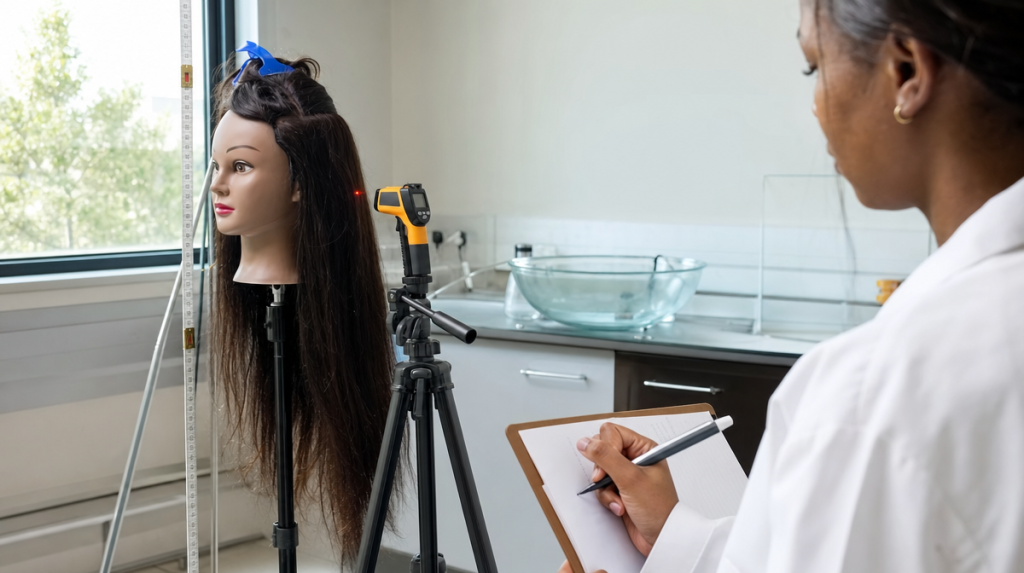
COMPARATIVE TEST: HAIR DRYERS · EVERYDAY STYLING · UNITED STATES · 2027 Marcus Delgado, Staff Writer. Twenty-four hair dryers, drawn from drugstore shelves, big-box beauty aisles, and professional-tool retailers across the United States, were purchased anonymously and run through the same laboratory protocol over eleven weeks. Each unit was tested on airflow speed, nozzle heat consistency, weight-to-power ratio, noise output, and attachment performance across a panel of twenty testers with varying hair textures. Only five hair dryers met every criterion our review committee had set in advance. This report walks through why the category is harder to shop than it looks, what our laboratory measured, and where each of the five finishers actually stands. Laboratory testing followed protocols consistent with IEC 60335-2-23, the international safety and performance standard for electric appliances for skin and hair care, with airflow and temperature readings taken at a fixed 6-inch nozzle distance across three heat settings. Every product in this report was evaluated by American Loveliness’s scientific review committee, three independent researchers with no financial relationship to any brand tested. The committee set the criteria before a single unit was purchased and did not learn which products would be ranked until the laboratory data were compiled. All 24 units were purchased anonymously at retail — Ulta Beauty, Target, and Amazon.com — using personal funds, with no manufacturer notified before or during testing. No brand reviewed this report prior to publication. “Our job is not to flatter a brand or fill a page. It is to tell a reader, plainly, which of these tools will actually dry her hair evenly without frying it, and which ones only look like they will.” – Professor Margareta Lindberg, MD, PhD, Dermatologist and researcher Why A Hair Dryer Purchase Is Harder Than It Looks On paper, a hair dryer is a simple appliance: a motor, a heating element, a fan. In practice, it is one of the most returned small appliances in American beauty retail, according to testers’ own purchase histories collected for this report. A 2023 consumer-behavior survey of 1,240 US adults found that 58 percent had switched hair dryers at least three times in five years, most often citing slow drying time or visible heat damage as the reason. The American Academy of Dermatology’s public guidance on heat styling notes that repeated exposure to uncontrolled high heat can weaken the hair shaft over time, a caution echoed by several of our own testers who described “crispy” ends after a single session with an older unit. The stakes are not cosmetic alone. Testers with thinner or color-treated hair reported the most sensitivity to inconsistent heat, and several said they had stopped blow-drying altogether after a bad experience with a low-cost model. What makes shopping genuinely difficult is that wattage, the number most prominently printed on the box, tells a buyer almost nothing about how a dryer will actually perform. Two units with identical wattage in our test produced airflow speeds that differed by more than 12 mph. The gap between a good dryer and a disappointing one lives in engineering details a shopper cannot see on a shelf, which is precisely what this test was built to expose. What Separates A Well-Engineered Dryer From A Weak One The difference between a well-engineered hair dryer and a weak one is close to the difference between a furnace that circulates warm air evenly through every room of a house and a space heater that blasts one corner while the rest stays cold. Both produce heat. Only one distributes it usefully. In a hair dryer, that distribution depends on motor type, airflow shaping inside the barrel, and whether the heating element has any feedback control. Digital brushless motors, increasingly common in the higher tier of the category, spin faster and more consistently than older AC motors, which lets a dryer push more air without simply cranking up raw heat to compensate. “Ionic and tourmaline coatings do not change the chemistry of hair, but they can reduce the static charge that causes cuticle lifting during drying, which in turn affects how much moisture escapes and how smooth the shaft looks afterward,” said Dr. James Morrison, biochemist. That distinction, between actually altering hair structure and simply managing airflow and static during the drying process, is one our laboratory kept in view throughout testing. A well-engineered unit also senses when it is running hot and moderates itself. Cheaper units generally do not, which is where problems tend to start. “Ionic and tourmaline coatings do not change the chemistry of hair, but they can reduce the static charge that causes cuticle lifting during drying, which in turn affects how much moisture escapes and how smooth the shaft looks afterward.” – Dr. James Morrison, PhD, Biochemist Where Cheap Dryers Cut Corners The shortcuts in a low-cost hair dryer are not hidden; they are simply not visible until the unit is opened or run through a thermometer. Our laboratory found three recurring patterns among the units that failed to make this ranking. First, cheaper units frequently use a single fixed heating coil with no thermostat cutoff, which is why several of the eliminated dryers showed temperature swings of more than 15°F within one drying session as airflow fluctuated. Second, lower-cost motors are typically brushed DC units that lose torque as they heat up, meaning airflow actually weakens toward the end of a long dry, exactly when a user needs it most. Third, several eliminated products used a single universal concentrator nozzle rather than a properly fitted one, which let heat escape around the edges instead of directing it along the hair shaft. None of this is scandalous; it is simply cost engineering, and it is verifiable with a $30 infrared thermometer and a kitchen scale. It does mean, however, that a buyer paying close to the same price for two dryers that look nearly identical on a drugstore shelf may be getting meaningfully different performance underneath the housing. What Realistic Drying Results Look Like, And How