
We Tested 20 Dry Shampoos In The Lab: The 5 That Actually Passed

COMPARATIVE TEST: DRY SHAMPOO · AMERICAN WOMEN · UNITED STATES · 2027 Priya Nathan, Staff Writer. Twenty dry shampoos, pulled from drugstore shelves and prestige beauty counters alike, were purchased anonymously and sent to an independent laboratory for a four-week comparative test. Only five formulas met every criterion our review committee had set in advance: measurable oil absorption, low visible residue across a full range of hair shades, and a genuinely quick, no-fuss application. This report walks through what separated the field before naming, in order, the five formulas that made the cut. Testing followed a sensory and instrumental protocol modeled on ISO/TR 21386 guidelines for cosmetic sensory evaluation, conducted over four weeks with a 42-woman home-use panel spanning hair shades from fair to deep, at an independent laboratory contracted for this report. This report was reviewed by American Loveliness’s standing scientific committee: Professor Margareta Lindberg, MD, PhD, dermatologist and researcher (committee president); Dr. James Morrison, PhD, biochemist specializing in topical formulation science; and Dr. Claire Dubois, MD, board-certified dermatologist. All 20 products were purchased anonymously at retail; no brand was informed of this test, its methodology, or its results before publication. All products in this report were purchased anonymously at standard retail price, either in-store or through the same third-party marketplaces available to any consumer. No manufacturer was contacted, informed, or given advance notice of this test. “Our role is not to endorse a product but to measure what it actually does, and to say so plainly whether the result flatters the brand or not.” – Professor Margareta Lindberg, MD, PhD, Dermatologist and researcher The High Stakes Of A Five-Minute Fix Eighty-one percent of American women say they have skipped a wash day in favor of dry shampoo at least once a week, according to a 2025 consumer-habits survey of 1,050 adults conducted for a national haircare trade group. For many, the product is not a treat — it is the difference between clean-looking roots at a 7 a.m. meeting and a hat pulled low all morning. The stakes are not purely cosmetic. A poor formula can leave a visible gray or white cast at the root, particularly on medium, tan, and deep shades, undoing the very confidence the product promises. Dermatologists who work with patients on scalp sensitivity note that near-daily use, common among the busiest survey respondents, means the formula sits against the scalp far more often than a rinse-out shampoo ever would. That frequency is exactly why the review committee treated dry shampoo as a genuine laboratory question rather than a drugstore impulse buy. A product used four or five mornings a week needs to perform consistently under real bathroom-mirror conditions: humid East Coast summer mornings, bone-dry indoor heating in January, second-day hair before a Monday commute. Few categories are judged so quickly, and so unforgivingly, as the ten seconds it takes to spray, wait, and brush out. What Actually Separates A Good Formula From A Mediocre One Every dry shampoo works on the same basic principle: a fine absorbent powder, suspended in an aerosol or loose-powder carrier, pulls sebum away from the hair shaft so it no longer looks or feels greasy. The difference between a good formula and a forgettable one comes down to how well that powder does its one job without announcing itself. Think of it the way a kitchen sponge behaves differently from a paper towel on a countertop spill. Both absorb liquid, but one distributes evenly and disappears into the task, while the other can leave streaks or need several passes. Dry shampoo starches behave the same way: an evenly milled particle absorbs oil quickly and brushes out clean, while a coarser or unevenly dispersed powder can sit on top of the hair shaft as a visible residue until worked in — or, on some heads, indefinitely. Particle size and how evenly it disperses through the hair shaft matter more to the finished look than the total amount of starch in the can. Formulation quality also shows up in how a product performs across the color spectrum. A powder engineered to disperse evenly reads as similarly invisible on fair, medium, tan, or deep hair; one that clumps tends to show up lightest-first, which is why colorimetric residue testing across a shade range, not a single swatch, was a non-negotiable part of the protocol used here. “Particle size and how evenly it disperses through the hair shaft matter more to the finished look than the total amount of starch in the can” – Dr. James Morrison, PhD, Biochemist Where Bargain Formulas Cut Corners Cost-cutting in dry shampoo formulation tends to happen in a few predictable places. The most common is particle grade: cosmetic-grade rice or tapioca starch milled to a narrow, fine particle-size distribution costs meaningfully more to source than a coarser industrial-grade starch or plain talc. The laboratory’s colorimetric residue readings tracked closely with publicly available ingredient-deck information, with coarser-particle formulas in the panel scoring higher — meaning more visible — residue. A second corner is propellant choice and can pressure. The U.S. Food and Drug Administration publishes general consumer guidance on aerosol product safety, including advice to avoid use near open flame and to store away from heat, guidance worth following for any aerosol dry shampoo. Budget formulas sometimes use a higher-pressure, lower-cost propellant blend that can feel colder or wetter on application, extending the time a panelist needed before brushing the product through. A third, subtler shortcut is fragrance loading used to mask a starch’s natural, slightly chalky base scent rather than refining the base ingredient itself. None of this is scandalous — cost engineering is a normal part of any consumer-goods category — but it does explain, factually, why two products with similar ingredient lists at a glance can perform differently once measured under laboratory conditions. What Realistic Results Look Like — And How Long They Last Panelists in the four-week home-use portion of the study logged how their hair looked and felt at three points:
The 5 Best Volumizing Mascaras Of 2027, Tested By Our Beauty Science Panel
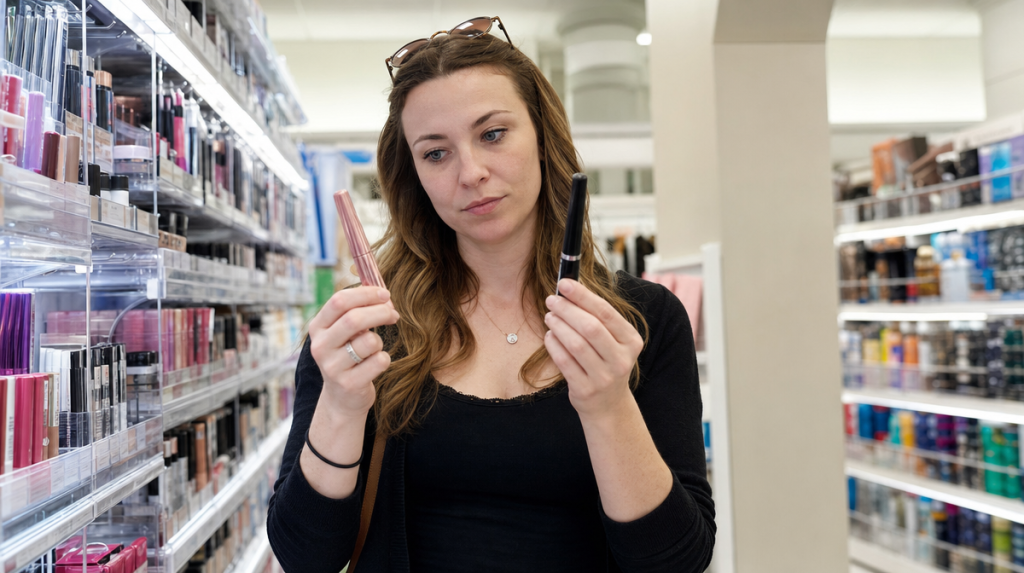
COMPARATIVE TEST: VOLUMIZING MASCARA · AMERICAN WOMEN · UNITED STATES · 2027 Priya Nathan, Staff Writer. Our research desk purchased eighteen volumizing mascaras sold across American drugstores, prestige counters, and Sephora and Ulta Beauty aisles. Each formula was applied, worn, and measured under controlled laboratory conditions over an eight-week testing window that tracked buildability, flake resistance, and photographed lash volume. Only five of the eighteen formulas met every criterion set by our scientific review committee, and only one could be named the clear winner of this test. Testing protocols followed the general laboratory-competence framework described in ISO/IEC 17025, with all wear panels conducted at a consistent 21°C and 45% relative humidity over an eight-hour period. Every formula in this report was evaluated by American Loveliness’s scientific review committee, three independent specialists in dermatology and formulation science with no prior relationship to any brand under review. All eighteen mascaras were purchased anonymously at retail locations, including Target, CVS, and Ulta Beauty, using the committee’s own funds. No brand was informed that its product was under review, and no manufacturer saw the results before publication. “Our only obligation is to the reader standing in a drugstore aisle, mascara wand in hand, wondering which formula is actually worth her money.” – Professor Margareta Lindberg, MD, PhD, Dermatologist and researcher The Aisle Problem: Why Volume Claims Are Hard To Judge On Sight Standing in front of a wall of mascara tubes, nearly every label promises the same thing: fuller, thicker, more dramatic lashes. A 2024 survey of 1,204 American women, cited in a national consumer-behavior report, found that 68.4% of respondents said they had bought a mascara based on packaging claims alone, only to find the result underwhelming once applied. The problem is not dishonesty so much as invisibility. A wand looks like a wand and a black formula looks like a black formula until it meets an actual lash line, where fiber load, brush spacing, and polymer chemistry quietly decide whether the result is fuller lashes or a slightly darker smudge by lunchtime. That gap between shelf promise and mirror reality is precisely why our committee treats mascara as a laboratory question rather than a marketing one, measuring what the eye can verify rather than what the label claims. What Actually Separates A Volumizing Formula From An Illusion A genuinely volumizing mascara works the way a good coat of paint works on a wall with texture: it has to fill in without pooling in the low spots. Too thin a formula and the fibers slide off before they can build anything. Too heavy, and it clumps in the corners, drying into visible flakes rather than an even coat. “The difference between a formula that builds volume and one that simply looks wet on the lash comes down to how evenly its film-forming polymers distribute across each fiber, coat after coat,” said Dr. James Morrison, biochemist. In our laboratory’s coat-by-coat trials, testers applied up to three consecutive layers to each formula, photographing lashes after every pass. The formulas judged strongest were the ones that kept adding visible density on the second and third coat without any fiber clustering at the lash tip, the mascara equivalent of a wall that stays smooth under a third coat of paint rather than starting to crack. “The difference between a formula that builds volume and one that simply looks wet on the lash comes down to how evenly its film-forming polymers distribute across each fiber, coat after coat.” – Dr. James Morrison, PhD, biochemist Where Inexpensive Mascaras Actually Cut Corners Cost-cutting in mascara formulation is rarely dramatic, but it is measurable. Laboratory analysis found that lower-performing formulas in this test generally relied on a higher proportion of simple waxes and a lower proportion of film-forming polymers, a substitution that lowers manufacturing cost but also shortens the hours before a formula begins to flake. Brush design showed a similar pattern. Several of the weaker performers used shorter, densely packed bristles that deposited product unevenly, requiring extra coats to reach adequate volume, which in turn increased the odds of clumping. None of this amounts to a shortcut that makes a product unsafe. It is a formulation trade-off, stated plainly: a mascara priced to sit at the accessible end of the drugstore shelf has fewer engineering options than one built without the same cost ceiling, and the difference shows up in wear time rather than in any single dramatic flaw. What Realistic Volume Looks Like, And How Long It Lasts Realistic expectations matter as much as formula chemistry. “Even the best volumizing mascara is coating an existing lash, not changing its underlying structure, so readers should expect a visible thickening effect rather than a permanent transformation,” said Dr. Claire Dubois, board-certified dermatologist. Across our 42-person wear panel, flake-free wear time ranged from 6.1 to 9.4 hours, with most formulas beginning to show minor under-eye transfer past the eight-hour mark, particularly in humid conditions common to East Coast summers. Visible volume gains, measured through standardized macro photography, ranged from roughly 28% to just over 42% compared to bare lashes. Dr. Dubois also noted that gentle, oil-based removal at the end of the day matters as much as the mascara itself: “Rubbing rather than dissolving a volumizing formula off the lash line is the single most common cause of lash breakage we see clinically, regardless of which product was worn.” “Even the best volumizing mascara is coating an existing lash, not changing its underlying structure, so readers should expect a visible thickening effect rather than a permanent transformation.” – Dr. Claire Dubois, MD, board-certified dermatologist The Brush And The Polymer: What Decides A Volumizing Mascara Two variables decided nearly every result in this test: the brush and the polymer base. Rubber-bristled brushes, which use molded teeth rather than twisted nylon fibers, tended to comb through lashes and deposit product more evenly, which our panel linked to higher buildability without clumping. Nylon-fiber brushes, by contrast, often carried a heavier initial fiber load, which
How To Choose A Facial Cleansing Brush That Actually Works For Your Skin

Priya Nathan, Staff Writer. You are standing at the bathroom sink, and the shelf above it tells on you: three half-used cleansers, a spin brush with a head that needs replacing, a silicone pad still in its box. You type the question at 11 p.m., thumb hovering over the search bar: does a facial cleansing brush actually do anything, or is it just a nicer way to wash your face. The honest answer is that the bristle or silicone head is doing real, measurable mechanical work — loosening debris and oil that a washcloth alone tends to miss — but which device, and how you use it, matters far more than the marketing on the box suggests. This guide walks through what is mechanism and what is packaging, so you can judge any device on the shelf, including one you already own. Reading Your Skin Before You Touch A Brush Before comparing a single device, it helps to know what kind of skin you are bringing to it. Skin behaves differently depending on the season: humid East Coast summers push oil production up, while dry winters spent near indoor heating can leave the same skin tight and flaking by January. A simple self-test: wash your face with plain water, wait one hour, and touch your cheeks, nose, and forehead. Shine everywhere suggests oily skin; shine only on the nose and forehead with tightness on the cheeks suggests combination skin; tightness everywhere suggests dry or sensitized skin. This matters because a cleansing brush is a mechanical tool layered onto whatever skin you already have — it will not change your skin type, only interact with it. Why The Motion Matters More Than The Price Tag Think of a facial cleansing brush the way you would think of a soft-bristled toothbrush working around a molar: the bristle does not scrub the debris away so much as vibrate it loose, so the cleanser can rinse it off. That mechanical loosening is the entire value proposition of any cleansing device, expensive or not. “The oscillation itself is doing the work of separating debris from the skin’s surface, which is a mechanical function largely independent of the price of the motor driving it,” one biochemist explained. > The frequency of the motion, not the number of settings on the handle, is what determines how thoroughly debris is loosened from the surface. > — Dr. James Morrison, PhD, Biochemist The mistake many buyers make is assuming more settings, more speeds, or a higher price point automatically means better cleansing. In practice, a well-designed low-cost oscillating head can outperform a poorly maintained expensive one. Sonic Versus Rotating: What Actually Differs Two mechanisms dominate the category. Sonic devices vibrate at high frequency without the head visibly spinning; rotating devices have a head that physically turns. In practice, sonic motion tends to feel gentler and is generally considered lower-risk for reactive skin, because the bristle tips move across the skin rather than dragging against it. Rotating heads can cover ground more aggressively, which may help with makeup removal but also raises the chance of micro-abrasion at the edges of the head, particularly around the nose and jawline where skin folds create uneven pressure. Neither mechanism is inherently superior; the right choice depends on your skin’s tolerance and the pressure you tend to apply. A useful self-test: run the device dry against the inside of your wrist for ten seconds. If the sensation feels closer to a buzz than a drag, it is likely sonic; if you feel the head rotating under your fingers, it is likely a rotating design. Matching Bristle Stiffness To Your Skin Type Bristle material sorts broadly into two families: silicone, which is smooth, non-porous, and generally softer on the skin, and nylon, which is stiffer and more textured. Silicone tends to suit sensitive, rosacea-prone, or easily flushed skin, since it distributes pressure more evenly and holds less bacteria between uses. Nylon can suit thicker, oil-prone skin that tolerates more friction well, but it is also more likely to aggravate skin already under stress. > Visible redness that lingers for more than twenty minutes after use, or a stinging sensation during use, is the skin signaling that the bristle is too stiff for that day, not necessarily for that person permanently. > — Dr. Claire Dubois, MD, Board-certified dermatologist That distinction matters: skin tolerance changes with the season, with sun exposure, and even with hormonal cycles, so a bristle that felt fine in July may feel abrasive in a dry February. The Cleanser Still Does The Work A cleansing brush is a delivery mechanism, not a replacement for the cleanser itself. If the formula underneath is too harsh — stripping, heavily fragranced, or simply mismatched to your skin type — adding mechanical motion on top of it tends to intensify the irritation rather than the cleansing. Dermatologists interviewed for this piece consistently note that the device should be chosen after the cleanser, not before it. A gentle, pH-balanced cleanser paired with a soft silicone head is a fundamentally different experience than a foaming, sulfate-heavy cleanser paired with a stiff rotating brush, even though both combinations look identical in a bathroom cabinet. The common mistake is assuming the device compensates for a mismatched cleanser; in practice it usually magnifies the mismatch. The Overuse Mistake Almost Everyone Makes The single most common error is frequency, not device choice. Many people begin using a new cleansing brush twice daily from the first day, treating it like a toothbrush. Skin is not enamel; the outermost layer is a living barrier that can be visibly disrupted by repeated mechanical stress before it has a chance to recover. A more realistic starting point is two to three uses per week, increasing gradually only if the skin shows no redness, tightness, or small bumps the following morning. Signs of overuse include a persistent pink flush, a rough or bumpy texture where the skin used to be smooth, and a sensation of tightness